Manufacturing Systems & Technology
Connect engineering, quoting, planning, production, and business systems so information moves where it needs to go.
Make Your Systems Work for Your Manufacturing Operation
Manufacturers often invest in ERP, MRP, CPQ, and other systems expecting them to solve operational problems. Instead, employees end up working around the software, maintaining spreadsheets, re-entering information, and developing their own processes to fill the gaps.
Gallian Engineering looks at how information actually moves through your business and develops systems and workflows that support the way your operation needs to work.
Projects We've Done

ERP/MRP Systems & Integration
Is your software actually supporting your manufacturing process?
We know the headache. You spent a ton of money on software that was supposed to do everything. But then you got stuck with bolt-ons, incompatibilities, workarounds, and maybe even added people just to keep up with data entry.
How We Approach It
We start by understanding how information actually moves through your business. We identify gaps, duplicate data entry, manual workarounds, and disconnected systems, then have a conversation about which solution is best for you. It may be a process reconfiguration, new software, or some combination of the two.
When additional systems or integrations are needed, we can lead the overhaul as the project lead, ensuring every step in the process actually adds value to the business. We stay involved until the pieces work together the way they should.
Example
A manufacturer called Gallian Engineering because their ERP system was creating more work than it was eliminating. We came in and performed a Value Stream Mapping exercise with key stakeholders from each process and department. We determined that the engineering department needed to be more thorough when entering jobs for manufacturing. Adding only a few minutes to the engineering process eliminated hours of confusion and rework for the manufacturing team.
CPQ & Quoting Systems
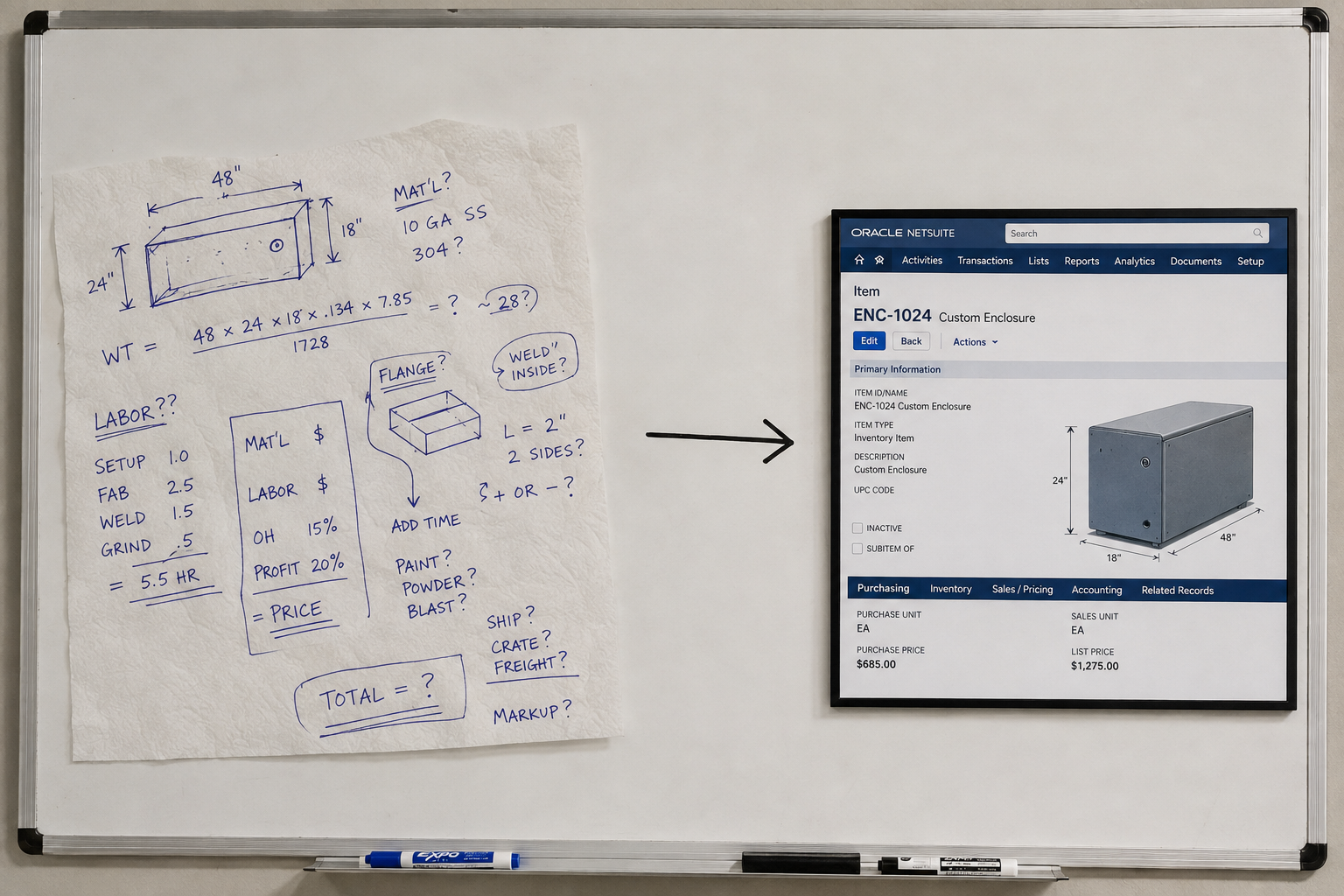
How much of your quoting process depends on one person knowing how everything works?
Complex products often require years of tribal knowledge to configure and quote correctly. As volume grows, that knowledge becomes a bottleneck, creating slow quotes, inconsistent pricing, and unnecessary engineering involvement.
How We Approach It
We break the quoting process down into its engineering logic: what information is required, what decisions that information drives—material, labor, shipping, and more—and what pricing and business rules need to be considered.
The goal is to turn that knowledge into a logical flow that can be translated into mathematical equations and if-then programming logic. We can then build, test, and refine the quoting system until it consistently produces the right answer.
Example
A customer's General Manager, who should have been focused on running the operation, was stuck quoting any job over $10,000. He was too busy to teach anyone his process and claimed there was a touch of "magic" to it.
Through multiple meetings and dozens of questions, Gallian Engineering had a functioning Excel quoting tool within two weeks that produced quotes within 2% of the General Manager's results. Once proven, the Excel tool was converted into a full Configure, Price, Quote system that incorporated stock inventory, actual labor rates, and automated item creation for ERP integration.
Labor Tracking & Manufacturing Applications
Do you actually know where your labor hours are going?
Many manufacturers aren't ready for a full-blown ERP/MES system—or simply don't need one yet. But that doesn't mean you have to operate without reliable production data. Gallian Engineering helps manufacturers gain visibility into labor, production status, and material usage without forcing them into a massive software implementation.
How We Approach It
We start by looking at your existing workflow and determining what level of technology actually makes sense. That could be a simple Excel tool, a Microsoft Power App, a custom application, or something more robust. We then build and implement the solution around your operation rather than forcing your process into someone else's software.
Example
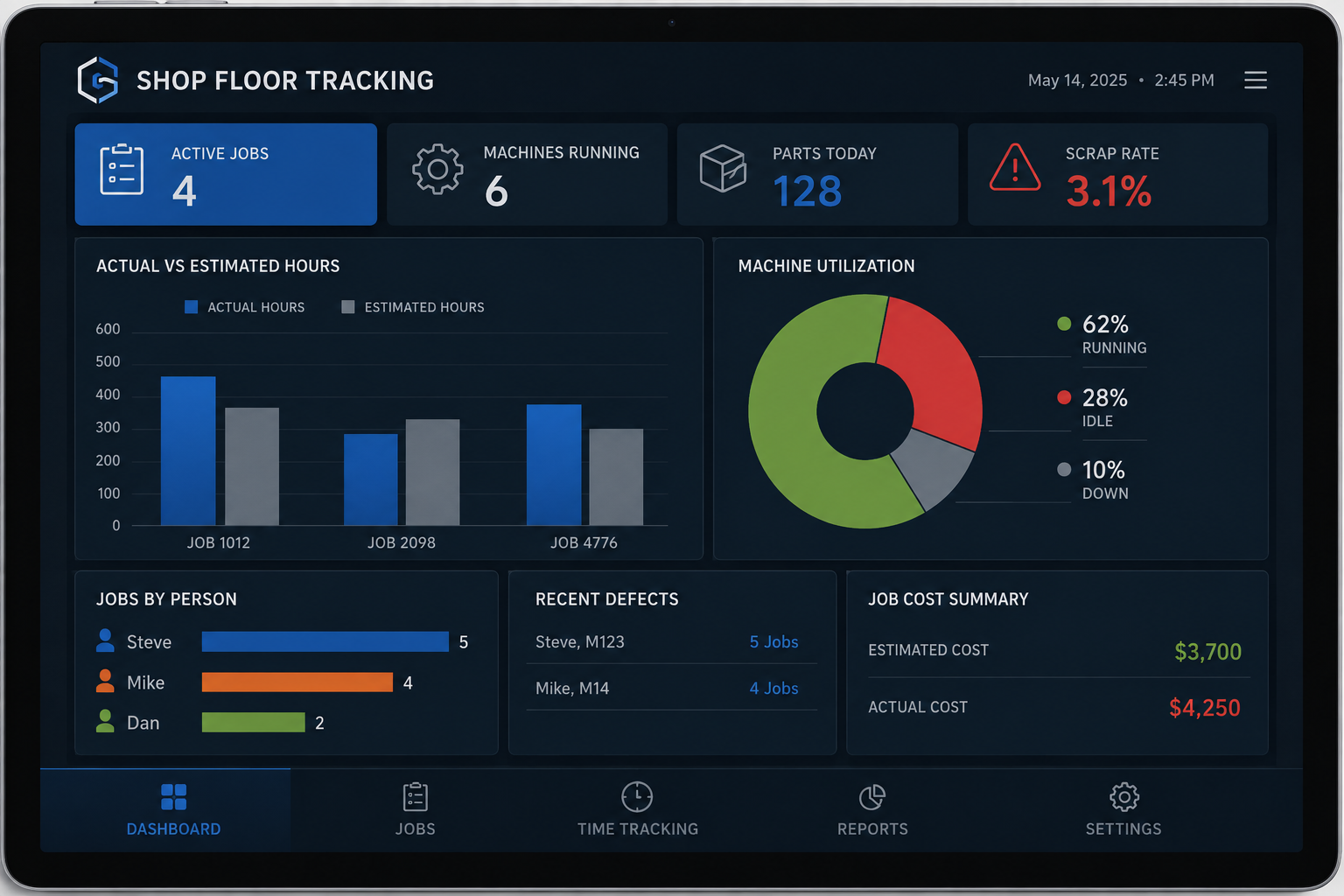
A manufacturer had open projects and work orders in its ERP but had very little visibility into what was actually happening after the work reached the shop floor. Gallian Engineering worked with its development team to build a shop-floor application and deploy tablets throughout the facility. Employees could log into jobs and record their time at each stage of production with simple green and red start/stop buttons.
The system gave management real-time visibility into where labor was being spent, where material scrap was occurring, who was working on each job, and exactly where each project was in the manufacturing process. Live dashboards gave the owner the ability to see what was happening across the operation from anywhere—even when he wasn't at the facility.
Technology Should Solve the Problem — Not Create Another One
We've seen it too many times: a manufacturer buys software because it promises to solve everything, only to end up with more complexity, more data entry, and more workarounds.
Gallian Engineering starts with the manufacturing process, not the software. We figure out what information needs to move, where the process is breaking down, and what technology—if any—actually makes sense.
01 Understand the Process
Understand how work and information actually move through your business.
02 Find the Gap
Identify bottlenecks, duplicate entry, manual work, disconnected systems, and information that isn't getting where it needs to go.
03 Build the Solution
Use the right tool for the problem. That might be an ERP configuration, Excel, Power Apps, a custom application, an integration, or a larger systems overhaul.
04 Make it Work
Implement the solution, test it with the people using it, and refine it until it actually works in the real operation.
You don't need more technology. You need the right technology.
Do these problems sound familiar?
Your ERP Creates More Work Than It Eliminates
Your team still relies on spreadsheets, emails, manual data entry, and workarounds because the ERP doesn't quite fit the way your business operates.
You Don't Know Where Your Labor Is Going
You know what you estimated for a job, but you don't know what you're actually spending. Labor overruns aren't identified until the job is finished—or worse, until you've already lost money.
One Person Knows How to Quote the Difficult Jobs
Your best estimator has years of knowledge in their head, and nobody else knows exactly how they arrive at the number. As volume increases, that person becomes the bottleneck.
You're Entering the Same Information Over and Over
Engineers, planners, purchasing, and production are entering or re-entering the same information into different systems. Every handoff creates another opportunity for an error.
You're Not Ready for a $500k software
You know you need better production data, but a full MES or ERP implementation is too expensive, too complicated, or simply more than your operation needs right now.
You're Making Decisions Without Good Data
You don't have reliable information on actual labor, production performance, scrap, or job status, so you're forced to make decisions based on estimates, spreadsheets, and what people tell you.