Manufacturing Engineering
Engineering Solutions for the Manufacturing Floor
Manufacturing problems are often symptoms of a process that was never designed to handle the operation it has become.
Bottlenecks, excessive labor, inconsistent production, poor information flow, and recurring quality issues can often be addressed through better engineering and process design.
Gallian Engineering works alongside your team to understand how your operation actually works, identify where it is breaking down, and develop practical solutions that can be implemented on the shop floor.
Projects We've Done
Shop Consolidation & Facility Optimization
Is your facility layout working against your operation?
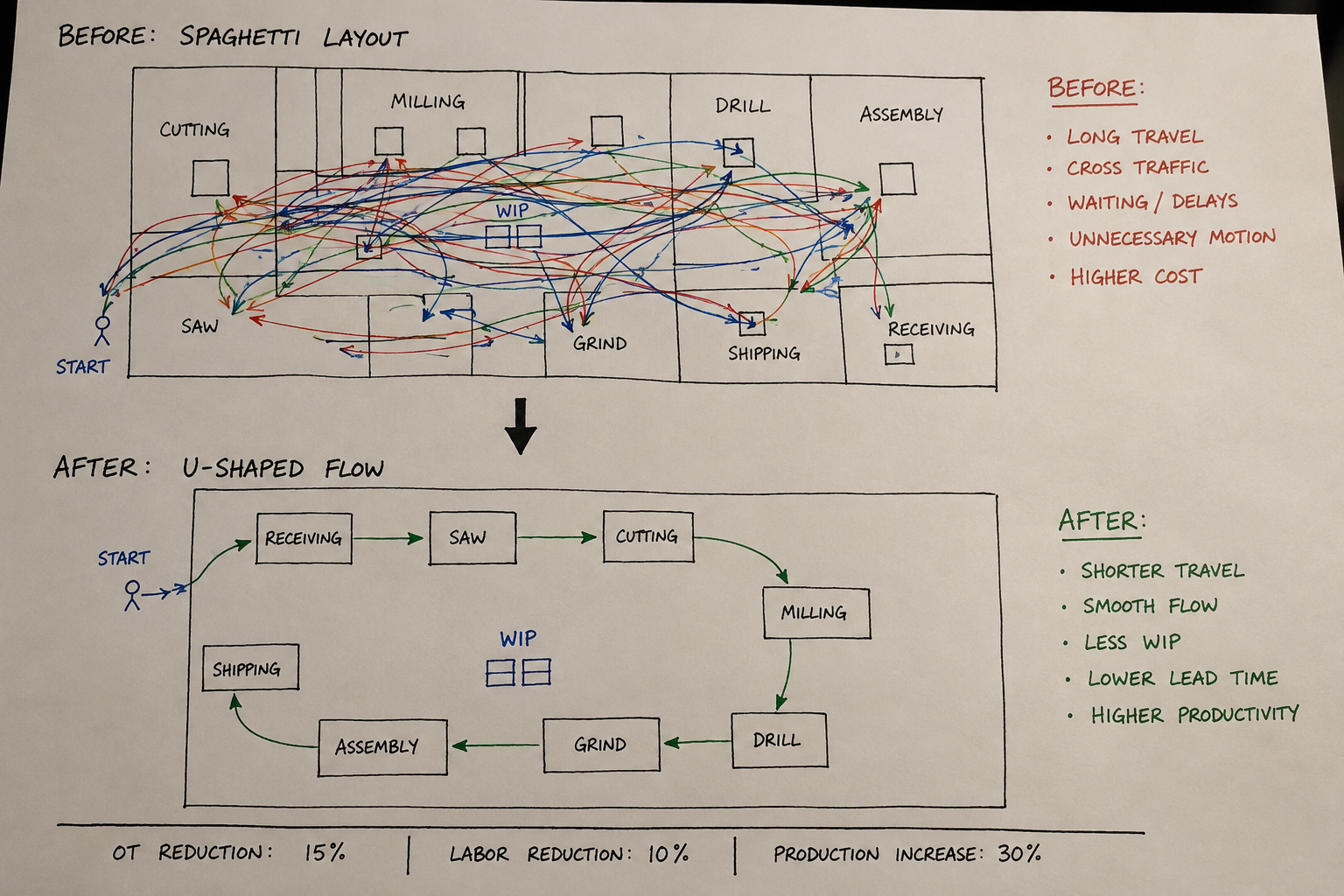
As manufacturers grow, chances are they've focused on adding machines and capabilities while movement efficiency has been put to the wayside. Gallian Engineering evaluates facility layout and production flow to determine how your operation can be structured more efficiently.
How We Approach It
We analyze how people, materials, equipment, and work move through your facilities. We look for unnecessary travel, cross-traffic, duplicated capabilities, underutilized space, and opportunities to create a more efficient production flow.
Example
A manufacturer was operating three separate shops in three different cities. We consolidated the operations into a single manufacturing facility and redesigned the shop layout around production flow. The result was a 15% reduction in overtime, 10% reduction in labor requirements, and 30% increase in overall production capacity.
Design for Manufacturing
Is your product designed to be manufactured efficiently?
A design can meet every functional requirement and still create unnecessary manufacturing cost. Gallian Engineering evaluates designs with the manufacturing process in mind, identifying opportunities to improve manufacturability without compromising performance.
How We Approach It
We look beyond the drawing to understand how the part will actually be produced. We evaluate geometry, tolerances, material, tooling, setups, machining strategy, and assembly requirements to identify opportunities to simplify production and reduce cost.
Example
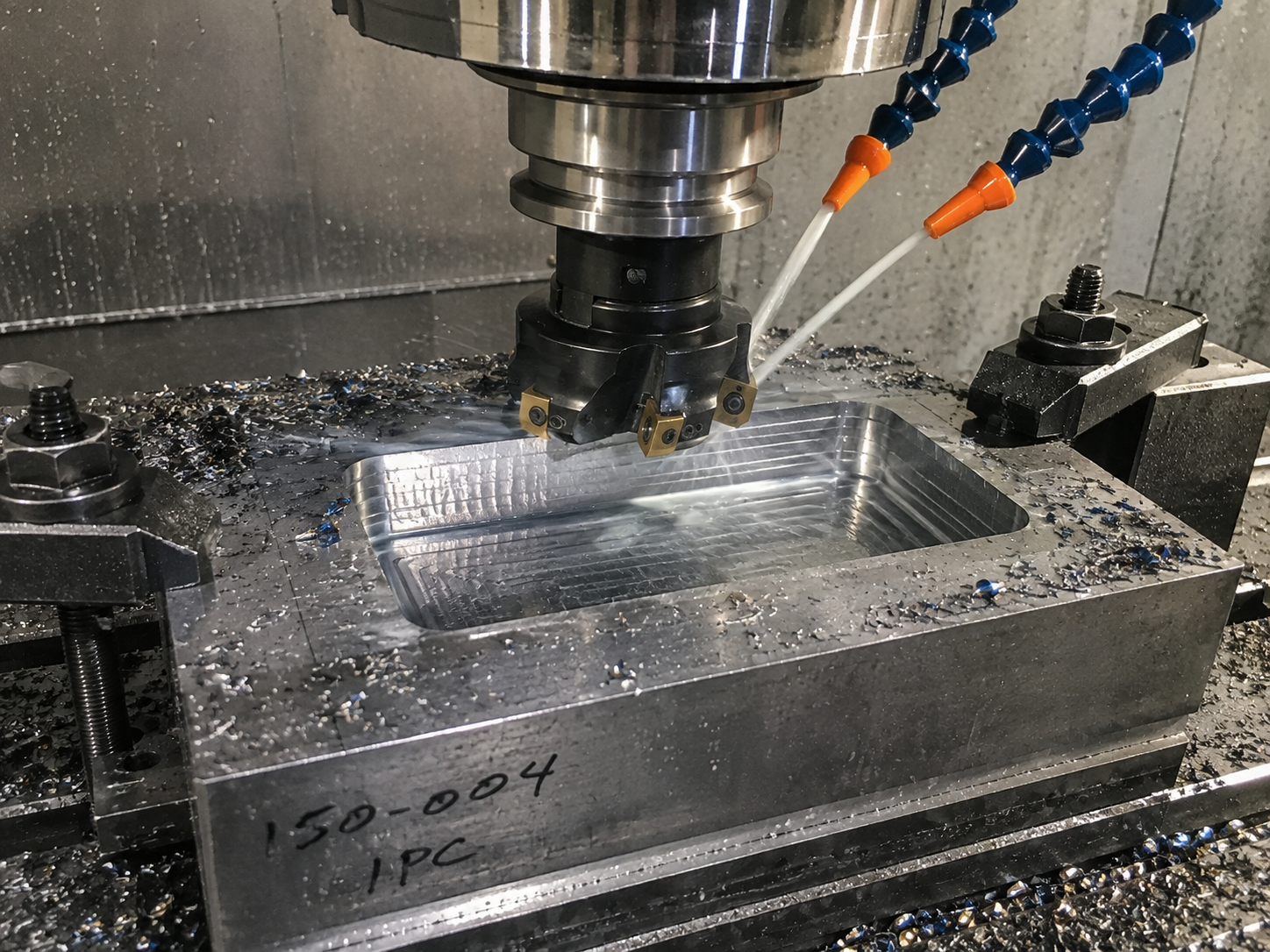
A customer was burning through cutting inserts while milling a square cavity. Our review found that the cavity walls did not need to be perfectly perpendicular to the top surface. Adding a 2° wall angle improved chip evacuation and coolant flow, reducing insert consumption while maintaining the functional requirements of the part.
Capacity & Production Analysis
Do you know where your production capacity is actually being lost?
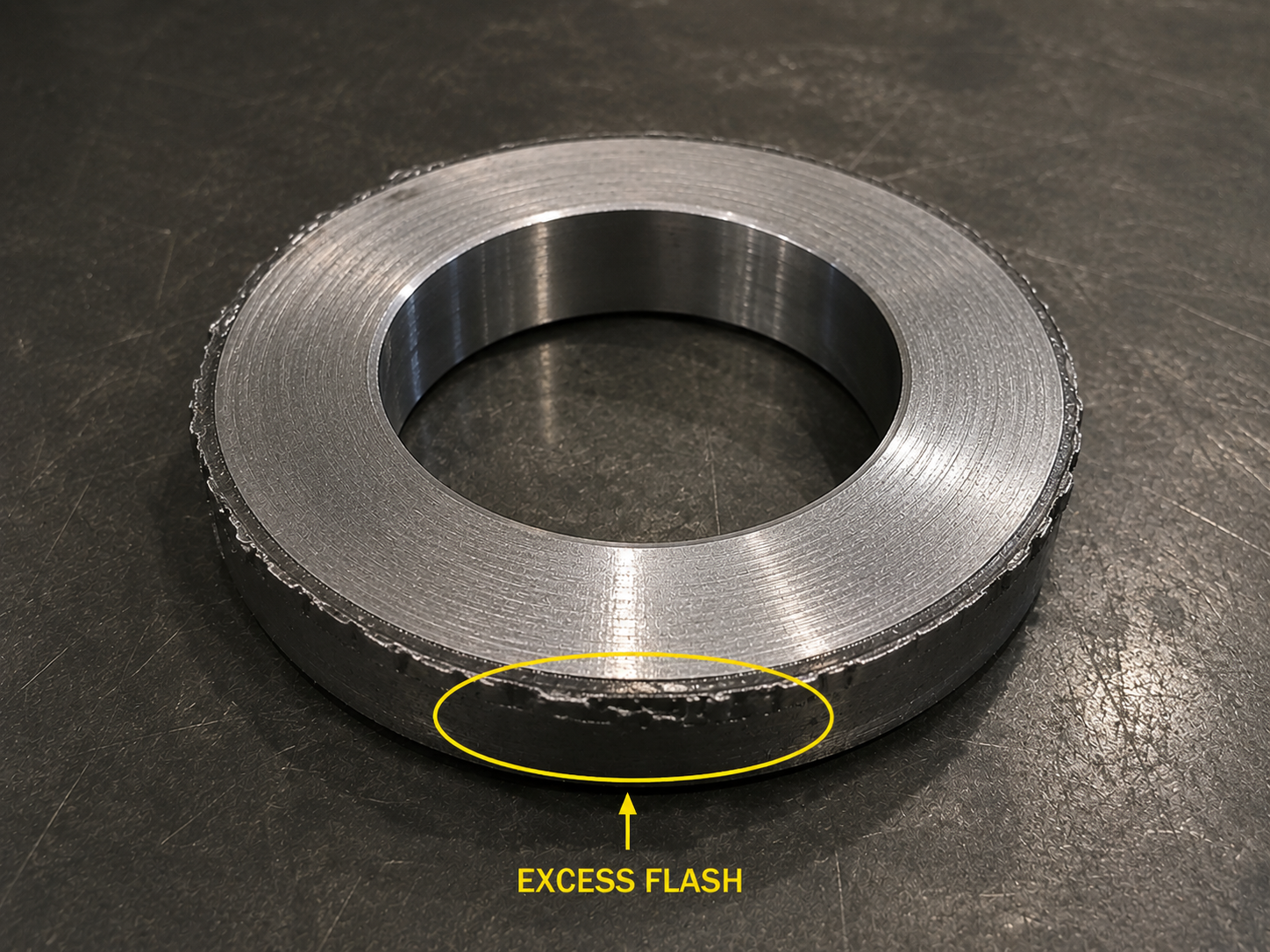
Manufacturers often know they need more capacity before they know what is actually limiting production. Gallian Engineering evaluates equipment, labor, processes, scheduling, and production flow to identify the constraints affecting throughput.
How We Approach It
We analyze actual production requirements against available machine and labor capacity, looking at cycle times, utilization, bottlenecks, downtime, changeovers, and production flow. This helps determine whether you actually need more equipment or labor, or whether existing capacity is simply being used inefficiently.
When additional equipment or tooling is actually needed, we leverage our network of machine and tooling companies to help you find the right solution. We cut through the sales pitch and help you make the decision based on what your operation actually needs.
Example
A manufacturer was considering purchasing a $200,000 CNC lathe to increase production capacity based on complaints from the shop foreman. Gallian Engineering reviewed the products, processes, and equipment utilization and determined that a new lathe wasn't the answer. The real constraint was a bottleneck in receiving and vendor coordination that was delaying part setup.
Work Instructions & Standardization
Can your newest employee do the job correctly without asking your most experienced employee?
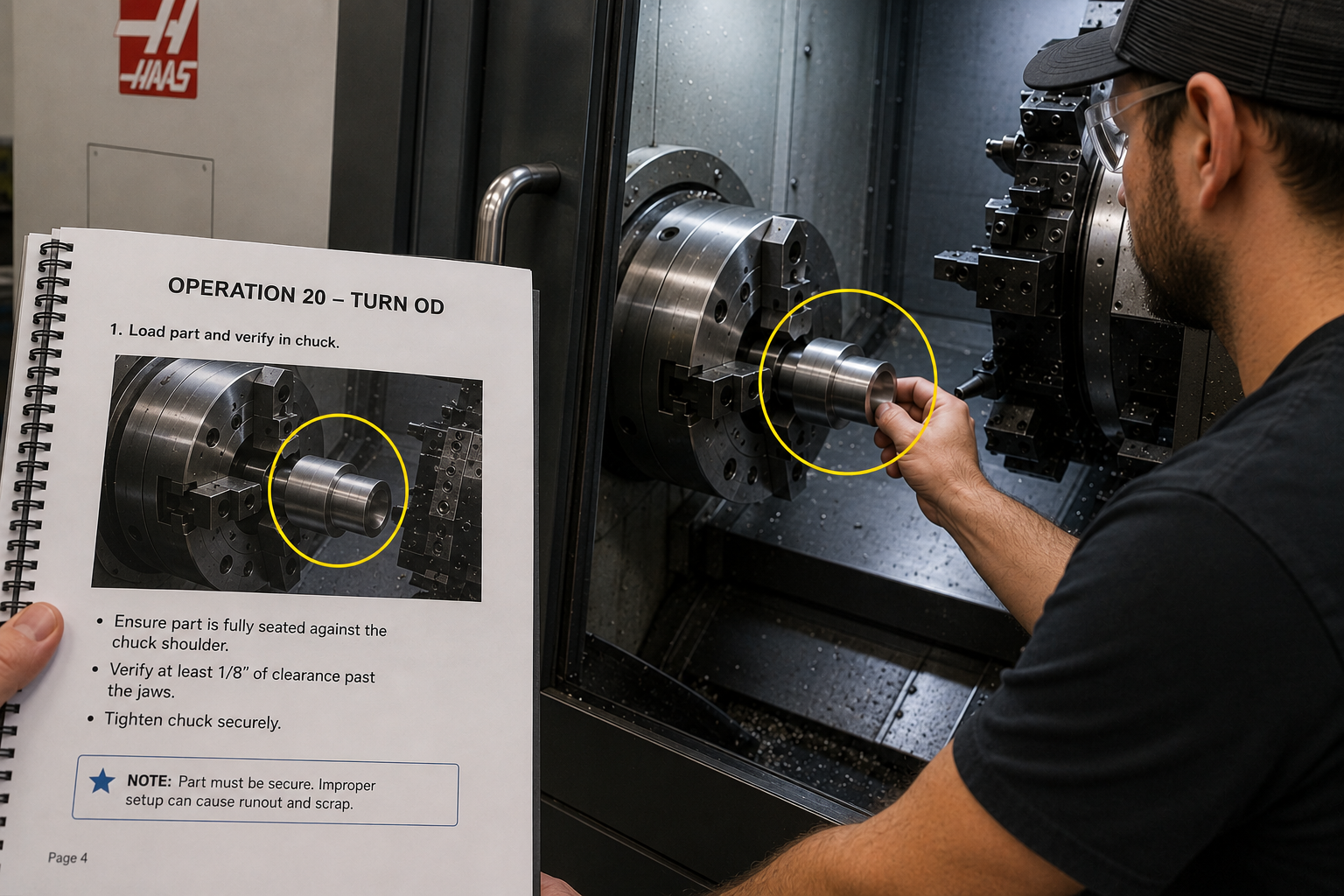
As manufacturers grow, tribal knowledge can become a major constraint. The people who know how to do the job correctly are often the same people being pulled in ten different directions to train everyone else. Gallian Engineering helps turn that knowledge into clear, repeatable processes that can be taught and followed consistently.
How We Approach It
We work with your experienced employees to document how work is actually performed, identify the critical steps and decisions that aren't captured on the drawing or router, and turn that knowledge into practical work instructions and standardized processes.
The goal isn't to create a 40-page procedure nobody will read. It's to give employees the information they need, where they need it, in the simplest way possible. Pictures, videos, and short written instructions.
Example
A manufacturer was growing quickly but relied heavily on the shift supervisor to oversee new hires and their quality of work. This resulted in inconsistent training and inconsistent results between shifts. New employees were learning different methods depending on who trained them. Gallian Engineering worked with the team to capture the critical knowledge and standardize the process into clear, usable work instructions, making training more consistent and reducing the reliance on tribal knowledge.
Manufacturing Engineering Built Around the Real Problem
The obvious problem isn't always the actual problem.
A machine that can't keep up might not need another machine. A difficult-to-machine part might not need a different process. A new employee struggling to meet expectations might not need more training.
Gallian Engineering looks at the entire manufacturing process to understand what's actually driving the problem before recommending a solution.
01 Understand the Process
We look at how the product is designed, how work moves through the facility, and how the job is actually being performed.
02 Find the Constraint
We identify the bottlenecks, unnecessary complexity, wasted motion, tooling issues, training gaps, and other factors limiting performance.
03 Build the Solution
We develop practical engineering solutions that fit your people, equipment, processes, and production requirements.
What is Holding You Back?
You're Running out of Capacity
Production is growing, but you're not sure whether you need another machine, another employee, or simply a better process.
Your Parts are Too Expensive
Designs may meet their functional requirements while creating unnecessary machining time, tooling consumption, setups, or other production costs.
Your Shop Floor Has No Flow
Material and employees are traveling farther than they should, departments are crossing paths, and your layout has evolved faster than your process has.
Your Best Employees Are Stuck Training and Not Producing
Critical knowledge lives in the heads of a few experienced employees, making it difficult to train new people consistently as you grow.
You're Solving the Same Production Problem Over and Over
Recurring problems, workarounds, and tribal knowledge can become part of the process instead of being addressed at the source.
You're About to Spend Money on a Solution You Aren't Sure You Need
Before investing in equipment, tooling, automation, or additional labor, understand what's actually limiting your operation.